Before a building pad ever sees a foundation crew, a site has to be turned from raw ground into a serviced parcel — water and sewer laterals run and tied in, storm drainage sized and piped to an outfall, detention built to the standard the City of Rowlett and North Texas Municipal Water District will actually sign off on. We self-perform the concrete and civil-adjacent scope of that sitework package for developers, owners, and general contractors building across Rowlett and the wider Lake Ray Hubbard corridor, so one crew is accountable for the ground getting from raw dirt to a permitted, inspected site.
Underground utility work is where most site schedules get won or lost. We install and tie in water and sanitary sewer laterals, coordinate storm sewer trunk lines and lateral connections back to city mains, and build the concrete structures that make a drainage system inspectable — junction boxes, headwalls, outfall aprons, and the reinforced pipe bedding a public works inspector expects to see before backfill goes over it. Detention and water-quality requirements around the Lake Ray Hubbard watershed run stricter than a lot of inland North Texas sites, and we build detention pond outlet structures and water-quality features to the civil engineer's exact grading and orifice specifications rather than approximating them in the field.
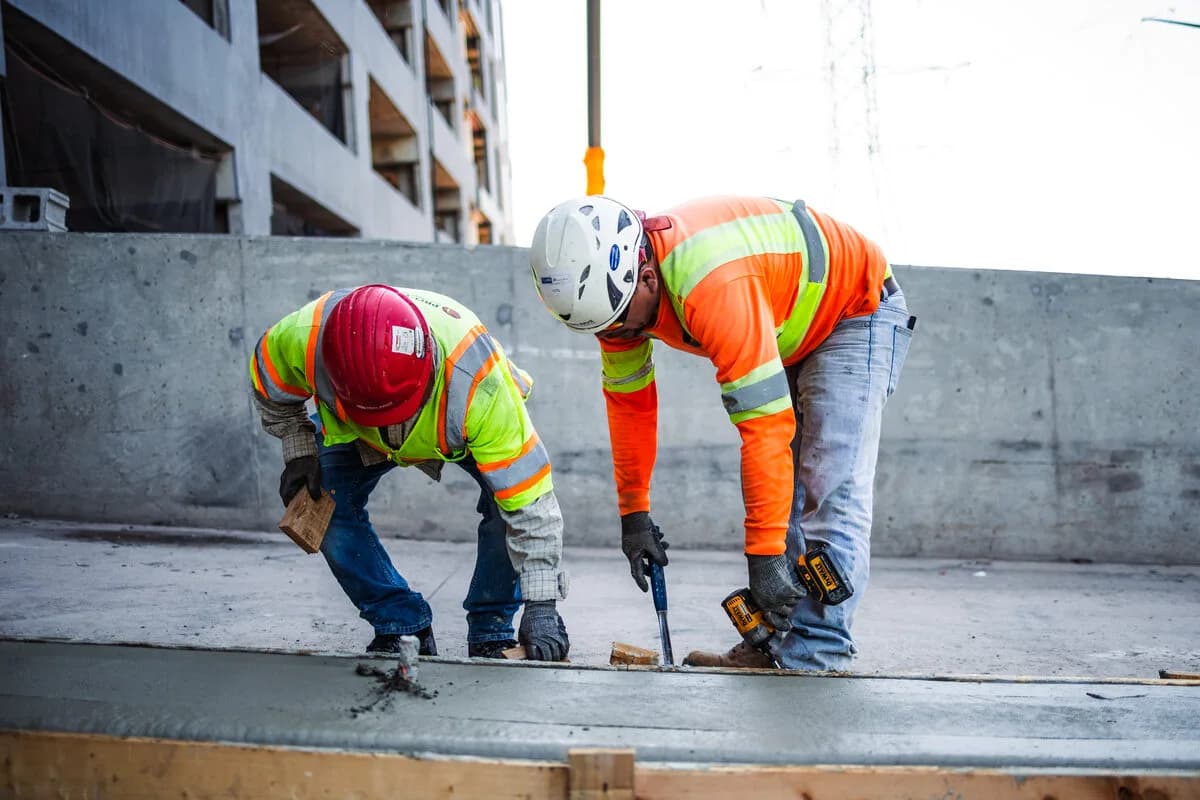
Above ground, that same sitework scope covers curb and gutter runs that establish the drainage pattern for a parking field, ADA-compliant sidewalks and ramps tied into the building entries, and the site concrete transitions — aprons, valley gutters, drive approaches — that connect a building's paving package to the public right-of-way. We sequence that work directly against our own paving crews and against the paving contractor when we are not self-performing that portion, so curb grades, drainage inlets, and finished paving elevations match on the first pour instead of getting fixed with a saw cut later.
Every phase of that sequence has an inspection attached to it in Rowlett — utility tap inspections before backfill, storm structure inspections before cover, and final site inspections before a certificate of occupancy gets issued. We build our schedule around those checkpoints instead of discovering them mid-project, and we keep as-built documentation of everything buried so a GC or owner has a real utility map when the next tenant improvement or repair crew needs to know what is under the parking lot. Whether the scope is a single retail pad or a multi-building industrial park, call us before the civil plans are even finalized — sitework sequencing decided early is what keeps a Rowlett site development on schedule through vertical construction.